
Before 2026
As Microsoft tightens its focus on license compliance across its business applications, the introduction of Dynamics 365 Finance and Operations (F&O) license enforcement marks a major shift for enterprises using the platform. While enforcement begins rolling out globally, many organizations are still trying to understand what it means, how it impacts daily operations, and what steps are necessary before 2026.
License Enforcement: A New Era of Accountability
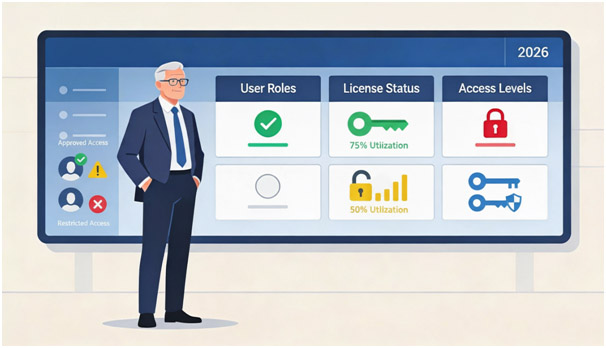
License enforcement marks a new era of accountability in ERP systems, ensuring every user’s access aligns with their assigned license. Previously, most platforms relied on
administrator-managed compliance without real-time checks. Now, runtime validation will automatically restrict unlicensed activities, helping organizations maintain
transparency and control.
Additional context is available in Microsoft’s September 2025 blog post on simplifying license management, accessible here.
Why Enforcement Is Becoming a Priority
Across the industry, software providers are standardizing license enforcement for a few key reasons:
- Compliance assurance: Ensuring organizations adhere to their subscription terms consistently.
- Transparent usage: Making it easier for executives, administrators, and auditors to map license allocations with functional access.
- Operational clarity: Reducing uncertainty between business, IT, and finance teams regarding role-based access rights.
- Streamlined audits: Automating a traditionally manual compliance process to minimize errors or inconsistencies.
This trend reflects a broader emphasis on responsible consumption, where transparency and control are embedded within enterprise systems by design.
Understanding the Enforcement Timeline
License enforcement is rolling out gradually. While many preview customers already see enforcement messages through 2024–2025, Microsoft is targeting early 2026 for full enforcement across all tenants.
The transition follows these phases:
- Awareness and opt-in previews: Organizations can voluntarily test enforcement in sandbox environments to gauge impact and adjust configurations.
- Partial enforcement: Key modules like General Ledger, Procurement, and Inventory begin active blocking behavior for unlicensed actions.
- Global enforcement: Enforcement becomes standard, with no option to disable or bypass checks in production.
Enterprises should use this staggered window to audit, test, and realign users and roles before enforcement becomes mandatory.
Potential Business Risks of Waiting
Postponing compliance alignment until enforcement becomes mandatory can expose an organization to avoidable disruption, such as:
- Workflow interruptions: Users may lose immediate access to critical system functions if licenses and roles are misaligned.
- Audit risks: Non-compliance can trigger unexpected costs or internal governance challenges.
- Operational slowdowns: Reactive fixes tend to extend downtime, affecting financial and supply chain continuity.
- Budgetary pressure: Emergency licensing corrections typically carry higher cost implications.
The greatest risk is operational – when enforcement automatically restricts business-critical processes without advance notice.
How to Prepare Before 2026
Taking an early, structured approach helps minimize friction and cost. Key steps include:
- Conduct a license audit: Map all user roles and security privileges against the Microsoft licensing guide.
- Align roles with licenses: Adjust permission sets so they strictly adhere to user entitlements under each module.
- Test in a sandbox: Enable enforcement in non-production environments and assess workflow behavior.
- Engage your partner: Collaborate with your Dynamics 365 partner or Microsoft CSP to ensure accurate role mapping and updated user models.
- Plan for continuous monitoring: Implement reporting to detect license mismatches early and maintain ongoing compliance.
Why Proactive Readiness Pays Off
Proactive readiness ahead of license enforcement helps enterprises avoid disruption while strengthening governance, compliance, and system integrity. Clear alignment between user roles and licenses enhances visibility, reduces audit risk, and fosters accountability. Treating the rest of 2025 as a readiness period enables organizations to adapt smoothly and maintain uninterrupted operations in 2026.
At SY Associates, we view enforcement not as a constraint but as an opportunity to improve governance, optimize costs, and ensure long-term operational resilience.